Purple Sweet Potato vs Ube: A Tale of Two Tubers
Published by Blooms Editorial
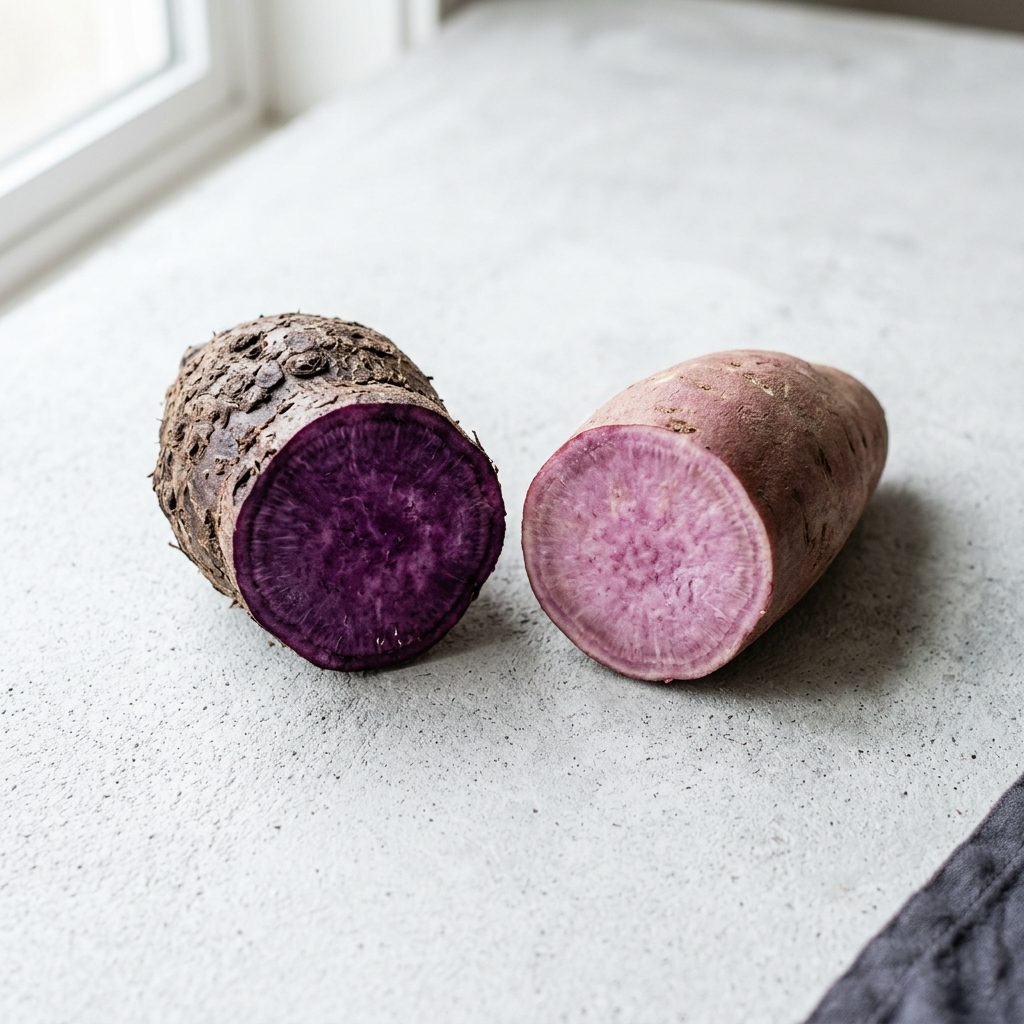
In the world of specialty beverages and artisanal desserts, color is often the first thing that captures our attention. But as any experienced barista or pastry chef will tell you, the true magic lies in the flavor. While purple sweet potatoes and authentic ube share a similar striking violet hue, they are fundamentally different ingredients with very different personalities.
The Earthy vs. The Aromatic
Purple sweet potatoes, such as the Okinawan or Stokes varieties, are prized for their earthy, mildly sweet, and starchy profile. They are wonderful for savory preparations and hold their structure well when roasted or mashed. However, they lack the "ethereal" quality that has made ube a global sensation.
Ube (purple yam) is a different experience entirely. It carries a naturally aromatic sweetness that many describe as a delicate marriage of vanilla, white chocolate, and toasted pistachio. It doesn't just taste purple; it tastes like a dessert in its rawest, most natural form. This aromatic complexity is why ube has become the cornerstone of luxury café menus.
Texture and Culinary Identity
Beyond the flavor, the texture of these two tubers sets them apart. Purple sweet potatoes are more fibrous and starchy, making them ideal for grain bowls or hearty sides. Ube, when processed into a fine powder or jam, becomes incredibly smooth and creamy. This makes it the perfect partner for dairy and plant-based milks, allowing it to dissolve into a velvet-like consistency in a layered latte or a silk-textured cold foam.
Why Authenticity Matters
As the "Ube Movement" grows, many cafés are tempted to use purple sweet potato as a substitute due to its availability. But for those aiming to provide a premium experience, there is no replacement for authentic purple yam. The vividness of the color, the silkiness of the texture, and most importantly, that signature vanilla-nutty aroma, are only found in true ube.